
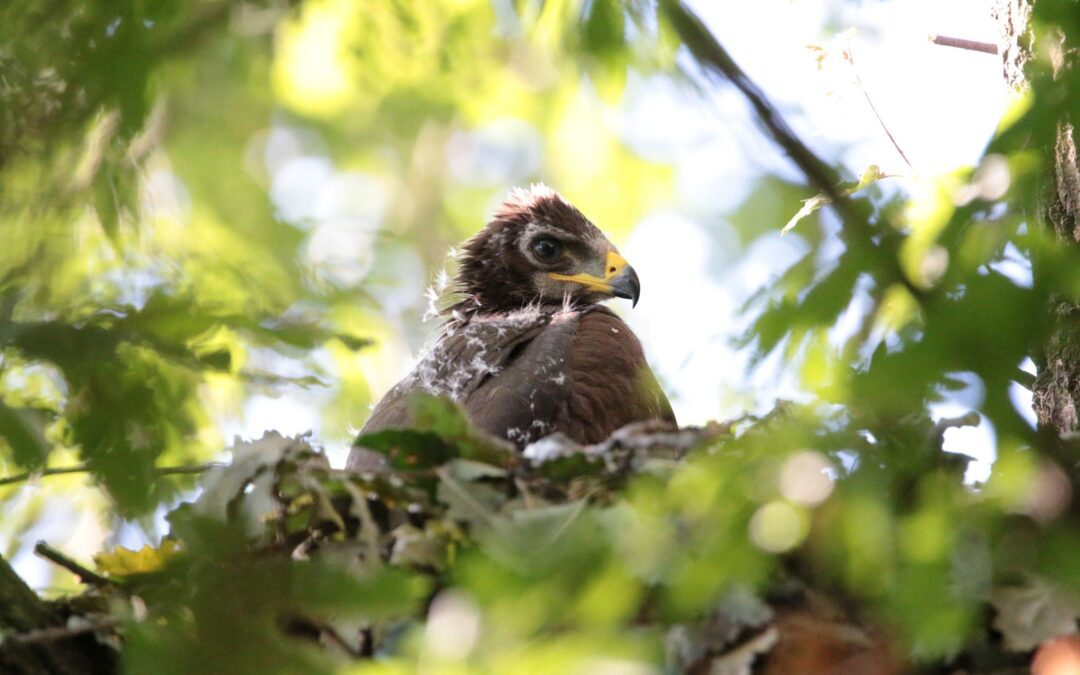
Photo: © Mihail Iliev/BSPB
The first systematic study of the post-fledging period reveals key behavioural characteristics that are crucial for the survival of young eagles
What happens to a Lesser Spotted Eagle in the first few weeks after it leaves the nest? Where does it spend its time, how far does it travel, and what habitats does it prefer? A new scientific study by the Bulgarian Society for the Protection of Birds (BSPB), published in September 2026 in the scientific journal Birds, provides answers to these questions.
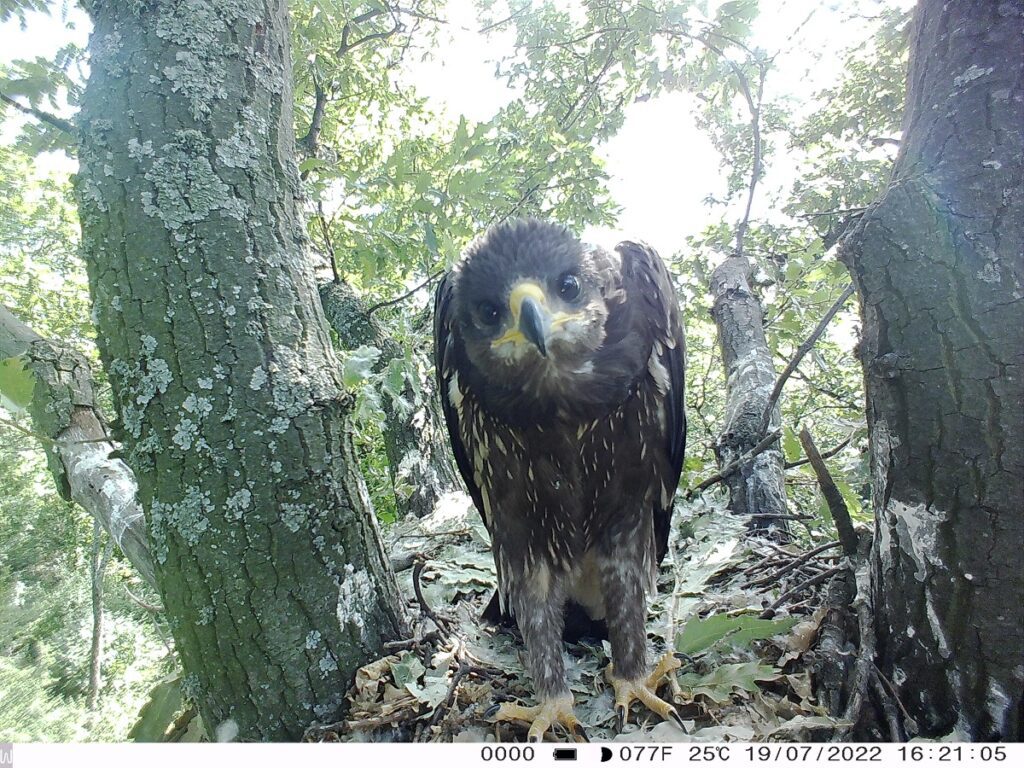
The study is the first systematic research into the so-called post-fledging dependency period in the Lesser Spotted Eagle (Clanga pomarina). This is a particularly important and vulnerable stage in the lives of young birds – the period between their first flight and the beginning of their independent dispersal or first migration. During this time, young eagles still rely heavily on their parents for food and protection, while gradually developing their flying and hunting skills.
The researchers tracked 14 juvenile Lesser Spotted Eagles using GPS/GSM transmitters in three areas of Bulgaria between 2020 and 2025. The birds were tagged at between 34 and 55 days of age. The results show that young eagles spend this period in a surprisingly small area around their natal nest. The average size of the area used was 2.41 km², while for half of the birds studied it was less than 1 km². The average distance the birds travelled during their exploratory flights was only around 1.5 km from the nest.
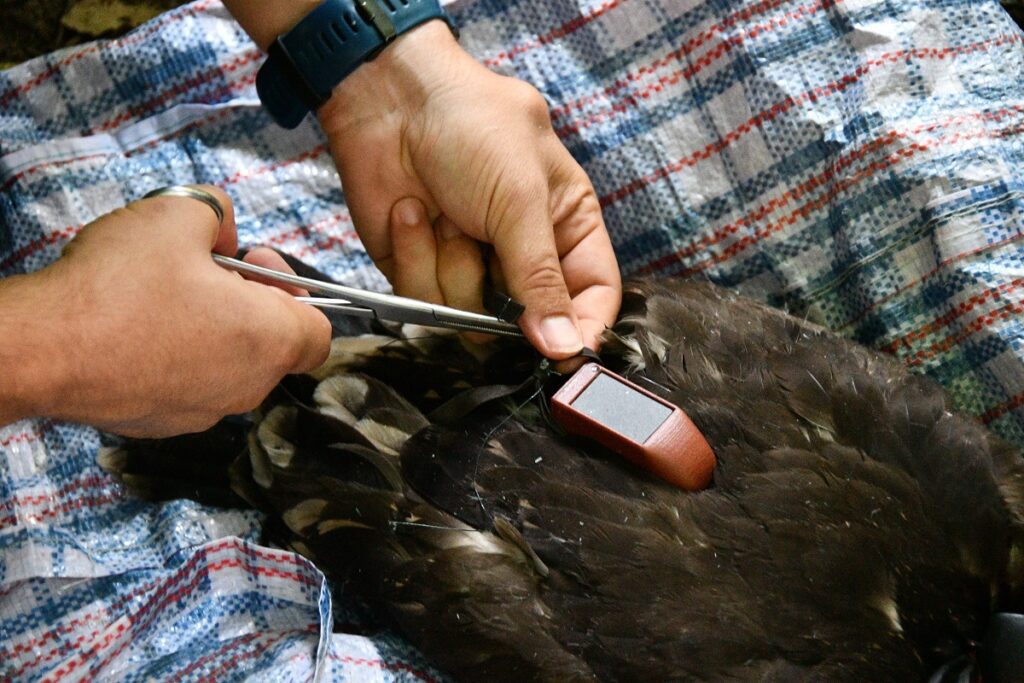
Photo: © Iordanka Goranova/BSPB
As time passes, however, the young eagles gradually become more active. In the first days after fledging, they make short flights and remain very close to the nest. As they gain experience, their flights become more frequent and longer, while immediately before the start of their first migration their activity increases significantly.
The average duration of the post-fledging dependency period was 47 days, ranging from 33 to 52 days among the birds studied. The young eagles began their first migration on average around 13 September, with the moment they became independent from their parents coinciding with the start of migration. The age at which the birds became independent ranged from 71 to 110 days, with a median of 95 days.
It turns out that the fledging date is the main factor determining the duration of this dependency period. Birds that leave the nest later have a shorter dependency period because the time of their first migration is approaching.
Another important finding is the strong preference of young eagles for forest habitats. Although forests accounted for only 4.72% of the available area in the study territories, they were used by the birds in 74.59% of recorded cases. The eagles also preferred gorges and river valleys, which provide suitable rising air currents for young birds that are still improving their flying skills.
In contrast to forests, young eagles avoided infrastructure and cultivated agricultural land. They also used grassland habitats significantly less often than expected. According to the researchers, this is probably because during this period the birds still rely mainly on their parents for food and spend most of their time close to the nest.
The new findings have important practical implications for the conservation of the Lesser Spotted Eagle. Traditionally, conservation measures have focused mainly on nests and the territories of breeding pairs. The study shows that the area around the nest remains critically important even after the young have fledged.
Therefore, conservation measures should continue after the end of the breeding season and cover the relatively small area used by young birds during the first months of their lives. The authors recommend paying particular attention to forest habitats and preserving the natural landscape around nests.
The study also highlights the need to take these findings into account when planning future infrastructure, including the development of solar parks and wind energy facilities, as well as changes in land use that may lead to the loss or fragmentation of suitable habitats.
“These results show us that in order to give young eagles a real chance of surviving and reaching their first migration, we need to protect not only the nest itself, but also the immediate surroundings. This is where young birds spend the most vulnerable period of their lives,” emphasises Dr Dimitar Demerdzhiev of BSPB.
The study was conducted as part of activities under the projects “Preserve Key Forest Habitats of the Lesser Spotted Eagle (Aquila pomarina) in Bulgaria” (LIFE12 NAT/BG/001218) and “Conservation measures for the Lesser Spotted Eagle and its habitats in Bulgaria” (LIFE18 NAT/BG/001051), funded by the LIFE Programme of the European Union.
The scientific article was published in the journal Birds on 1 September 2026.